
Last updated November 24, 2026
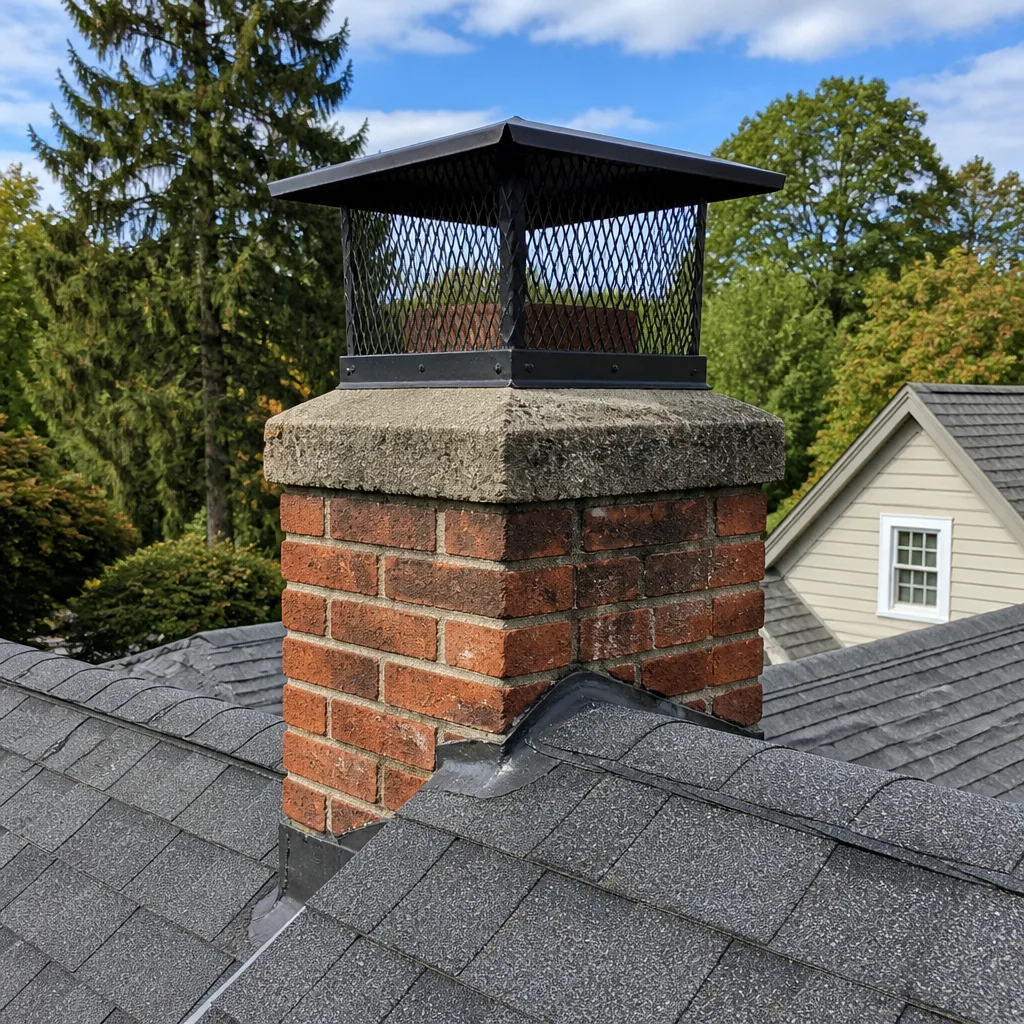 Sweep & inspection
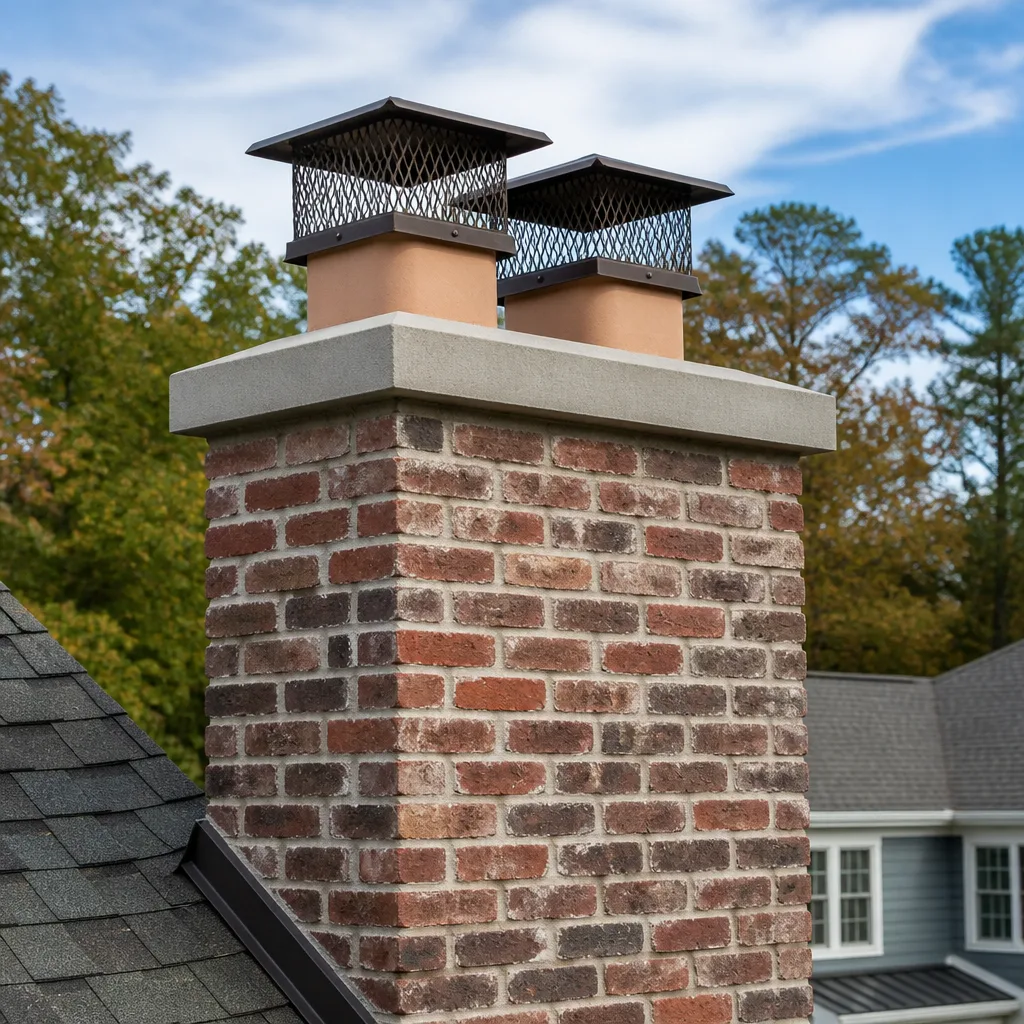 Caps & crowns
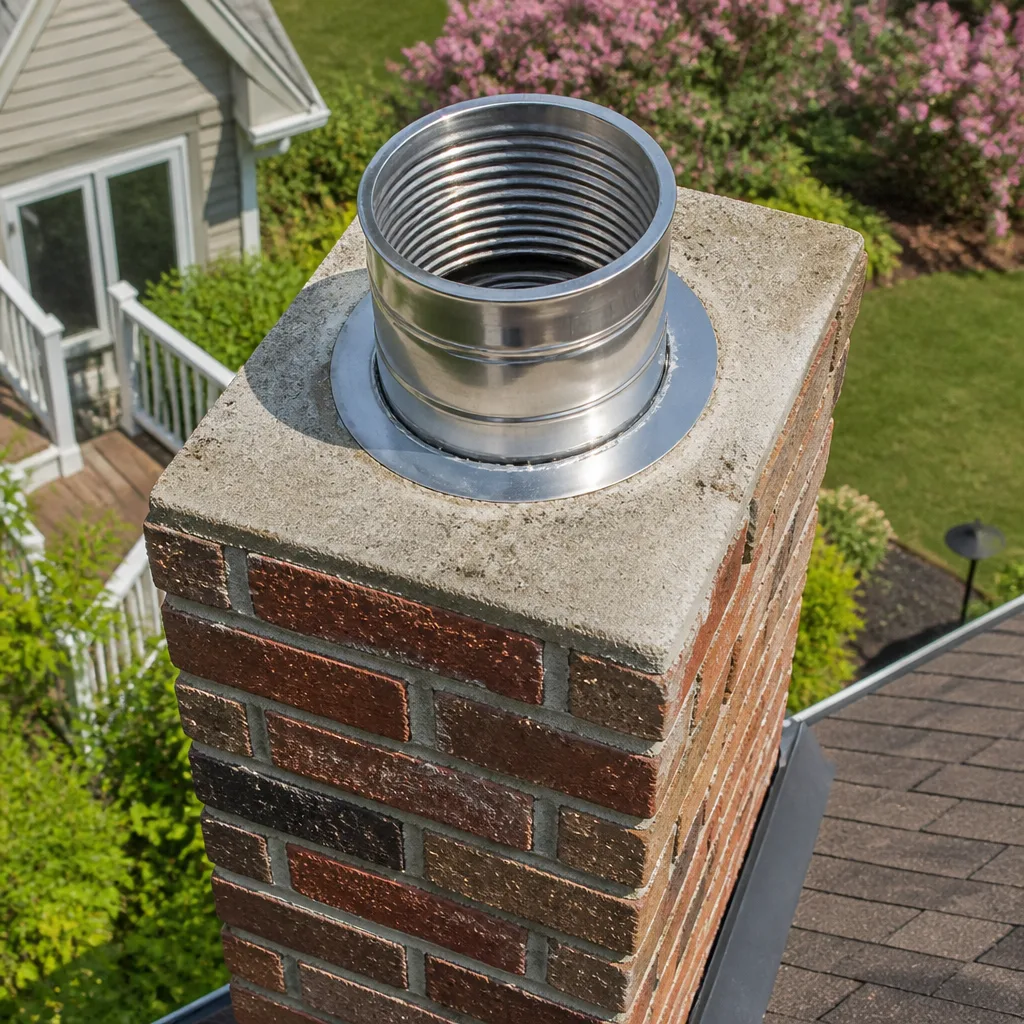 Flue relining
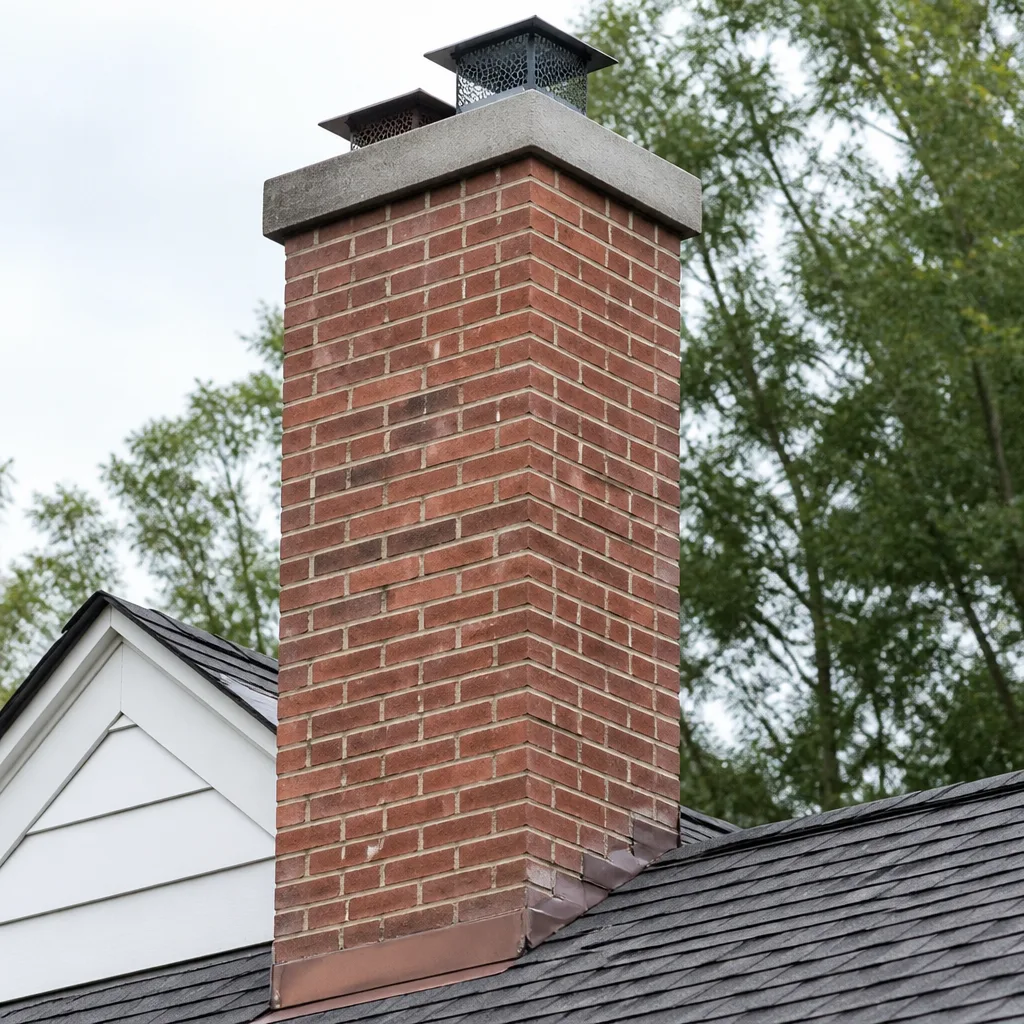 Masonry repair
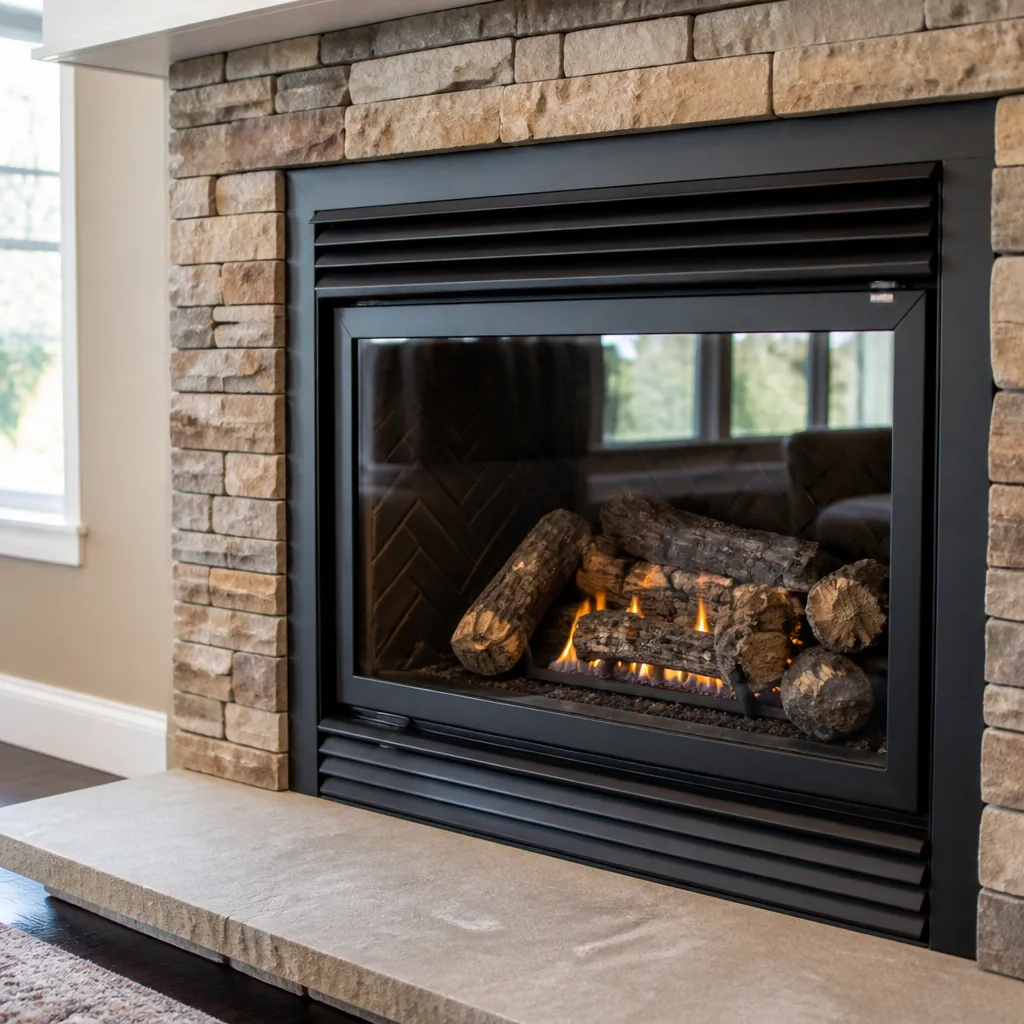 Gas fireplace service
Level 1 sweep and inspection to the NFPA 211 annual standard - flue, crown, cap, and flashing checked and photographed
Chimney sweep logs do not sweep chimneys. They loosen some creosote - which then falls where a brush and vacuum still have to collect it.
Seasonal Chimney Cleaning Care for Buckhead: Year-Round Homeowner’s Guide
The worst chimney damage we see in Buckhead rarely comes from a heavy fire in January. It comes from water. Georgia’s summer storm season pushes rain against caps, crowns, and flashing for months, and a flue nobody looked at after March can sit wet well into fall. By the time a homeowner lights the first fire of the season, mortar has softened and a liner has started to break down. This guide maps out what a Buckhead chimney actually needs month by month, why spring matters more than fall here, and how to prepare before the first cold night. You’ll get a schedule built for this climate, not a generic national checklist.
Quick Answer
In Buckhead, chimney care runs on a spring-plus-fall rhythm: a post-season inspection and cleaning in spring to catch winter wear and summer moisture before it spreads, then a fall preparation check in late September through October before first use. Because winters here are mild and burn seasons short, the bigger threat is humid summer air and storm-driven water intrusion, so cap, crown, and flashing condition matter as much as creosote buildup. A yearly sweep and inspection keeps the whole system sound.
Styles & brands we work with
- Sweep & inspection
- Caps & crowns
- Flue relining
- Masonry repair
- Gas fireplace service
Table of Contents
- Why Buckhead’s Climate Changes the Chimney Calendar
- What Happens Inside a Buckhead Chimney During Summer
- Why Spring Is the Most Important Inspection Window in Georgia
- How Georgia’s Storm Season Tests Caps, Crowns, and Flashing
- The Fall Preparation Window: Late September Through October
- A Month-by-Month Task Map for Buckhead Homeowners
- Burning Season: What to Watch While the Fire Is Lit
- Inspection Levels Explained: What Each One Covers
Why Buckhead’s Climate Changes the Chimney Calendar
Most seasonal chimney advice is written for places with long, cold winters and dry air. Buckhead doesn’t work that way. Winters are short and mild, so the number of fires a typical household burns is modest. The off-season, on the other hand, is long, warm, and humid, with a storm season that runs from June through September. That flips the usual logic: fire-related wear is light, while moisture-related wear is heavy.
That matters because a chimney is basically a vertical masonry and metal structure exposed to weather on every side. In a mild climate, the structure spends most of the year wet and warm instead of cold and dry, which is exactly the condition that softens mortar and rusts metal components. Buckhead homes sit under a canopy of mature trees, too, which keeps shaded roofs and chimney exteriors damp longer after a rain and gives wildlife plenty of routes onto a roof.
A few local realities shape the schedule:
- Shorter burn seasons mean creosote accumulates slowly, so a single annual cleaning usually covers a household’s fire use.
- Long humid summers create months of moisture exposure that has nothing to do with fire.
- Frequent summer storms test caps, crowns, and flashing repeatedly, so small failures get discovered late.
- Tree cover raises the odds of animal entry and leaf debris collecting on and around the chimney.
The practical result: your chimney needs attention at two points, spring and fall, and the spring visit is the one most homeowners skip. That’s the mistake this guide is built to correct.
What Happens Inside a Buckhead Chimney During Summer
When the last fire goes out in spring, most people forget the chimney exists until fall. Inside that flue, though, a slow process keeps working all summer. Warm humid air moves through the chimney, condenses on cooler masonry, and works into mortar joints and cracks. A hairline crack that opened over winter becomes an entry point for water, and once water is inside masonry, it stays there.
Three things tend to happen in a Buckhead chimney during the off-season:
- Moisture intrusion. Water enters through a missing or damaged cap, a cracked crown, or failing flashing at the roof line, then moves into the masonry and the smoke chamber.
- Mortar degradation. Repeated wetting and drying breaks down mortar joints from the inside, and softened mortar eventually lets water travel deeper.
- Animal entry. Birds, squirrels, and other animals find an uncapped flue an easy opening, and nesting material left in a flue is both an obstruction and a fire hazard.
None of this announces itself. From the living room it looks like a chimney that’s simply not in use. The warning signs appear later: a musty smell when the first fire is lit, a stain on the ceiling near the chimney, crumbling mortar visible from the roof, or debris dropping into the firebox. In our experience, the homes that need the most repair work in Buckhead are the ones where nobody looked at the chimney between March and September.
Summer is also when a damaged crown does the most harm. The crown is the concrete or masonry top surface that sheds water away from the flue. Once it cracks, every summer storm pushes water into the structure below it. A cap and crown in good repair is the single best defense against off-season damage, which is why we treat chimney cap & crown condition as a core part of any summer check.
Why Spring Is the Most Important Inspection Window in Georgia
National advice usually points to fall as inspection season. For Buckhead, spring is more important. A spring visit happens right after the burn season ends, while winter wear is fresh and before months of humid weather can turn a small problem into a structural one. Fix a crown crack in April and it never gets the chance to soak through a summer of storms. Wait until October and it has already had four months to work.
A proper post-season spring visit covers specific ground:
- Cleaning the flue of soot and any creosote built up during the burn season.
- Checking mortar joints in the firebox and smoke chamber for softening or cracking.
- Inspecting the crown and cap for cracks, gaps, or storm damage.
- Looking at flashing where the chimney meets the roof, since that’s the most common leak point.
- Confirming the damper opens, closes, and seals properly.
- Checking for animal activity or debris in the flue.
Spring is also the right time to document the chimney’s condition. If you bought a Buckhead home in the past year with an unknown chimney history, a spring inspection tells you what you actually have before the next heating season. A camera inspection produces a photo report of the flue interior, and that record is useful whether you’re planning maintenance, handling an insurance question, or negotiating a repair.
Get this one thing right and the rest of the year gets easier: the spring inspection is the anchor of the whole schedule. Everything after it, from summer moisture control to fall readiness, builds on what that inspection found.
How Georgia’s Storm Season Tests Caps, Crowns, and Flashing
From June through September, Buckhead weather does its hardest work on chimneys. This isn’t snow and ice country, so the stress comes from wind-driven rain, downpours, and the occasional fallen limb. Each component fails in a predictable way, and each failure tends to show up as water damage months after the storm that caused it.
Caps. A chimney cap does two jobs: it keeps rain and animals out of the flue, and it deflects sparks. A cap loosened by wind or rusted at its fasteners stops doing both. A missing cap means a direct path for rainwater into the flue all summer.
Crowns. The crown takes the full force of rain hitting the chimney top. A hairline crack in spring becomes a channel by August, and water reaches the masonry below the roofline.
Flashing. This is the metal seal where the chimney penetrates the roof. Storm winds flex it, and age lifts its edges. Flashing failures are the most common source of ceiling stains near a chimney, and they’re easy to miss from the ground.
For storm-season resilience, a few steps pay off:
- Have the cap inspected before June for loose fasteners, rust, and fit.
- Check the crown for cracks and have any sealed or rebuilt before the heaviest rain.
- Have the flashing checked where it meets the roof, not just from the ground.
- Clear leaves and debris from around the chimney base on the roof after major storms.
When a cap does need replacing, it should happen during the same visit as the inspection rather than as a separate appointment. That’s part of why we keep Gelco and Famco caps on hand, so a Buckhead homeowner scheduling a single visit gets the problem solved and doesn’t wait for a second trip.
The Fall Preparation Window: Late September Through October
In Buckhead, the preparation window before first use typically falls between late September and October. This is the last easy chance to make sure the system is ready before the first cold night arrives and a smoky fire makes the problem obvious. A fall check is not a duplicate of spring; it’s a readiness confirmation, focused on whether anything changed over the summer.
What a fall preparation visit should include:
- A visual check that the cap, crown, and flashing are sound after storm season.
- Confirmation the flue is clear of nests, debris, or obstruction before first use.
- A check of the damper and firebox for anything that would affect draft.
- A quick review of the liner’s condition, especially if the spring inspection flagged a concern.
- Replacement of a damaged cap during the same visit when needed.
If your spring inspection identified a developing liner problem, autumn is when to act on it, not when it’s discovered. Deteriorating clay tile liners are common in older Buckhead homes, and they can be resurfaced rather than rebuilt. HeatShield ceramic resurfacing restores a liner from the inside, which is the kind of repair most sweep-only companies have to turn away. Knowing whether your liner needs resurfacing or a full flexible liner replacement, such as a DuraFlex system, changes what your fall window looks like.
Book the fall visit early. Late September through October is a short window, and homes that wait until the first cold snap tend to collide with everyone else doing the same thing. Call (866) 947-8098. We answer 24/7. Fast dispatch from 7am to 7pm, Sunday through Friday.
A Month-by-Month Task Map for Buckhead Homeowners
Generic seasonal guides divide the year into four tidy seasons. Real chimneys in Buckhead need more granular attention because the climate doesn’t follow that pattern. Here’s a task map built for this area, month by month.
January through February. Active burn season. Keep fires burning efficiently, don’t overload the firebox, and watch for smoke rolling back into the room, which signals a draft problem.
March. The burn season winds down. Schedule the post-season inspection and cleaning while the season’s creosote is still fresh, before warm weather arrives.
April. Act on inspection findings. Crown cracks, mortar repairs, flashing, and liner concerns get addressed now, before the humid months make everything worse.
May. Confirm the cap is secure and the crown is sealed going into summer. This is the last low-humidity window before storm season begins.
June through September. Storm season. After major storms, check for visible damage from the ground, clear roof debris, and note any new ceiling stains or musty smells. Avoid opening a can of worms in the middle of summer if you can; get findings on record.
October. Fall preparation visit. Confirm cap, crown, flashing, flue, and damper before first use, and handle any cap replacement the same visit.
November through December. Active burn season again. Watch for the same draft and smoke signs, and keep an eye out for nests or debris if the chimney sat unused.
That’s eight touchpoints across the year, but the two that matter most are the spring inspection and the fall preparation. If you only do two things, do those. Everything else is monitoring between them.
Burning Season: What to Watch While the Fire Is Lit
Once the fire is going, the highest-value habit is paying attention to how the chimney behaves. A chimney that draw well and burns clean is telling you the system is functioning. Changes in behavior tend to show up before a repair becomes urgent.
What to watch for during the burn season:
- Smoke entering the room. This usually points to a draft problem, an obstruction, or a damper that isn’t opening fully.
- A strong smoky smell even when the fire is out. That often traces to creosote or moisture in the flue.
- Stains on the ceiling or walls near the chimney. These suggest water is getting in, most often through flashing or the crown.
- Debris falling into the firebox. Nesting material or loose mortar showing up in the firebox is a sign the flue needs attention.
- Visible damage when you look up at the chimney from the yard. A leaning cap or missing cap is obvious from below with a careful look.
If you notice any of these, it’s worth having the chimney looked at before the season ends rather than waiting for the fall window. Call (866) 947-8098. We answer 24/7. A call outside dispatch hours is booked into the next opening, Sunday through Friday, 7am to 7pm.
Also keep in mind that while the fire is lit, the firebox and damper take the daily wear. Family-room fireplaces in Buckhead see plenty of use in colder weeks, and the firebox mortar and firebrick are the components most likely to need attention. That’s a fireplace repair question rather than a sweeping one, and it’s worth identifying early.
Inspection Levels Explained: What Each One Covers
Not every inspection looks at the same thing, and understanding the levels helps you know what you’re paying for. The industry uses a three-level framework, and in practice the level you need depends on what you’re trying to find out.
- Level I inspection. A visual check of the readily accessible parts of the chimney and flue, done as part of routine maintenance and annual cleaning. It covers what the technician can see without special tools.
- Level II inspection. A more thorough check that includes the flue interior via camera, and typically covers accessible attic and crawl spaces. This level is appropriate for a new home purchase, after a chimney fire, after an earthquake or major storm, or when the system has changed.
- Level III inspection. The most detailed level, involving removal of parts of the chimney or adjoining structure to inspect concealed areas. It’s used when a serious problem is suspected and can’t otherwise be confirmed.
For most Buckhead households, the annual schedule uses a Level I inspection alongside cleaning, with a Level II when there’s a specific question to answer. A camera inspection that produces a photo report is worth asking for, because it lets you see what the technician sees rather than taking a recommendation on faith.
A few situations call for a Level II regardless of the annual schedule:
- Buying a Buckhead home where the chimney’s service history is unknown.
- An insurance question that needs documented condition.
- A change in how the fireplace burns after a storm.
- Any suspicion of a chimney fire, even a small one.
Knowing which level applies saves you from overpaying for the wrong inspection and from underpaying for one that misses the problem. If you’re not sure, that’s a fair question to ask when you book.
Common Mistakes to Avoid
- Skipping the spring inspection. The most common Buckhead mistake is treating fall as the only checkpoint. By the time fall arrives, a summer of moisture has already done its work.
- Assuming a mild winter means less chimney care. It means less fire wear, not less total wear. The moisture and storm damage in a long Georgia off-season more than makes up for it.
- Ignoring a cracked crown until the ceiling stains. The crown protects the whole chimney top from water. A crack left through storm season pushes water into the masonry and away from your field of view.
- Letting an uncapped flue sit through summer. An open flue invites animals and nesting material and gives rain a direct path inside. A cap pays for itself in one stormy season.
- Burning treated or wet firewood. Treated wood releases harmful fumes, and wet wood burns inefficiently and produces more creosote. Seasoned wood burns cleaner and safer.
- Using a general handyman for chimney work. Chimney repair involves specialized materials and techniques that vary from general contracting. The wrong material on a liner or crown can trap moisture and set the problem back.
- Treating a liner concern as a rebuild by default. Many aging liners can be resurfaced rather than replaced. Skipping that possibility can mean more disruption and cost than necessary.
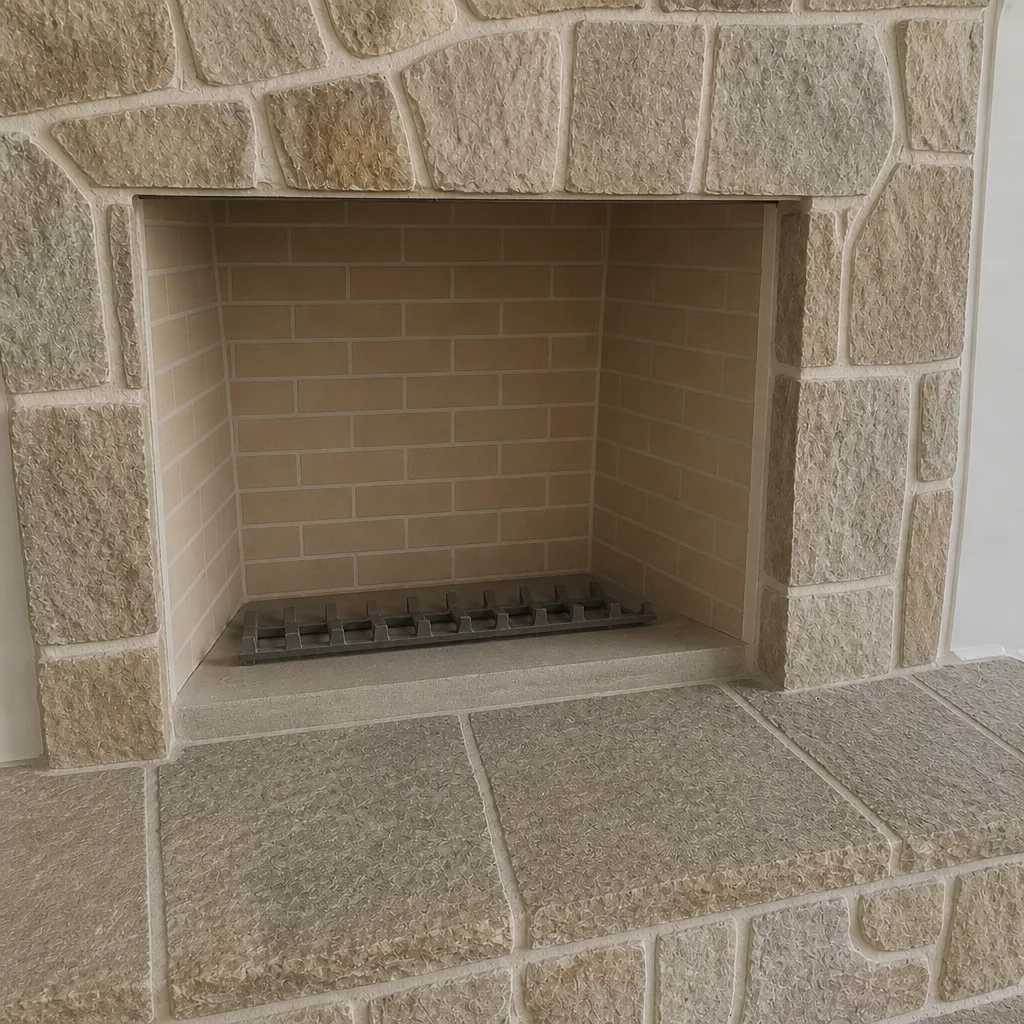
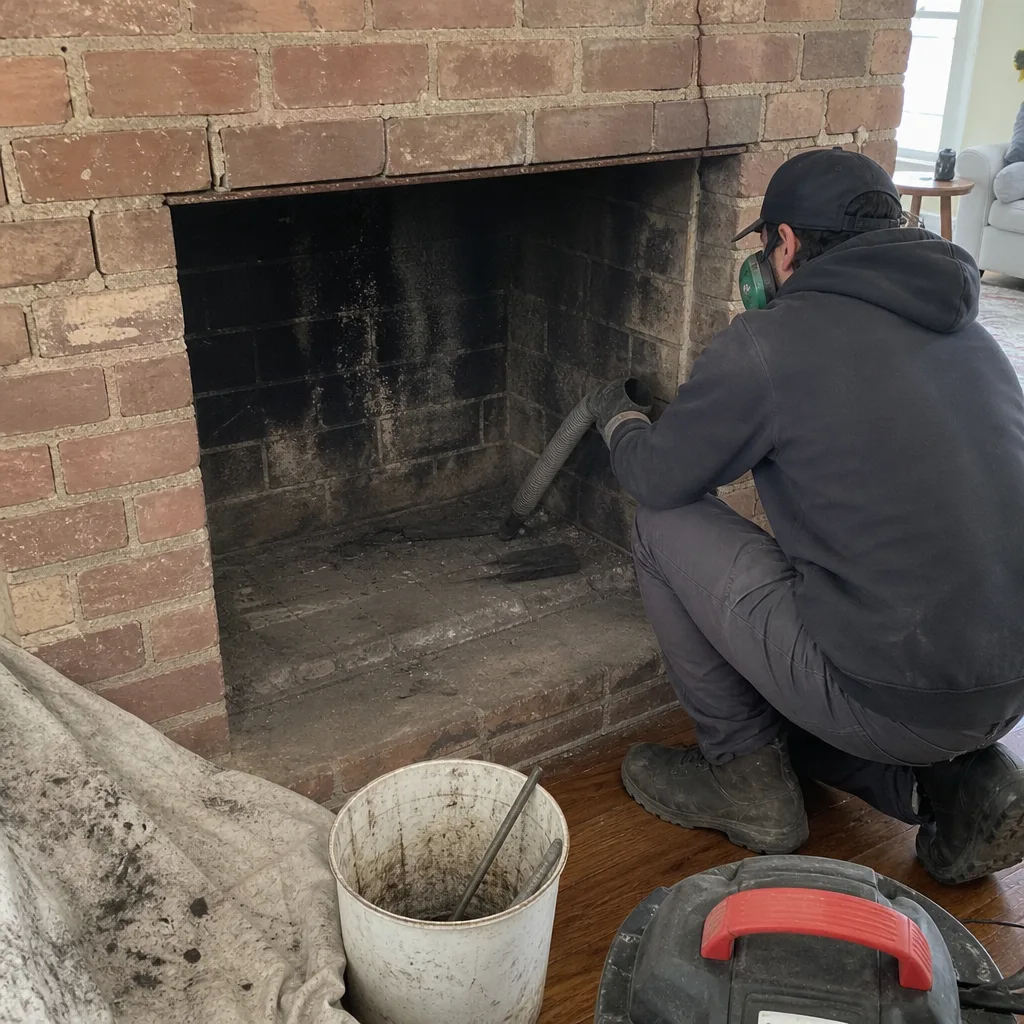
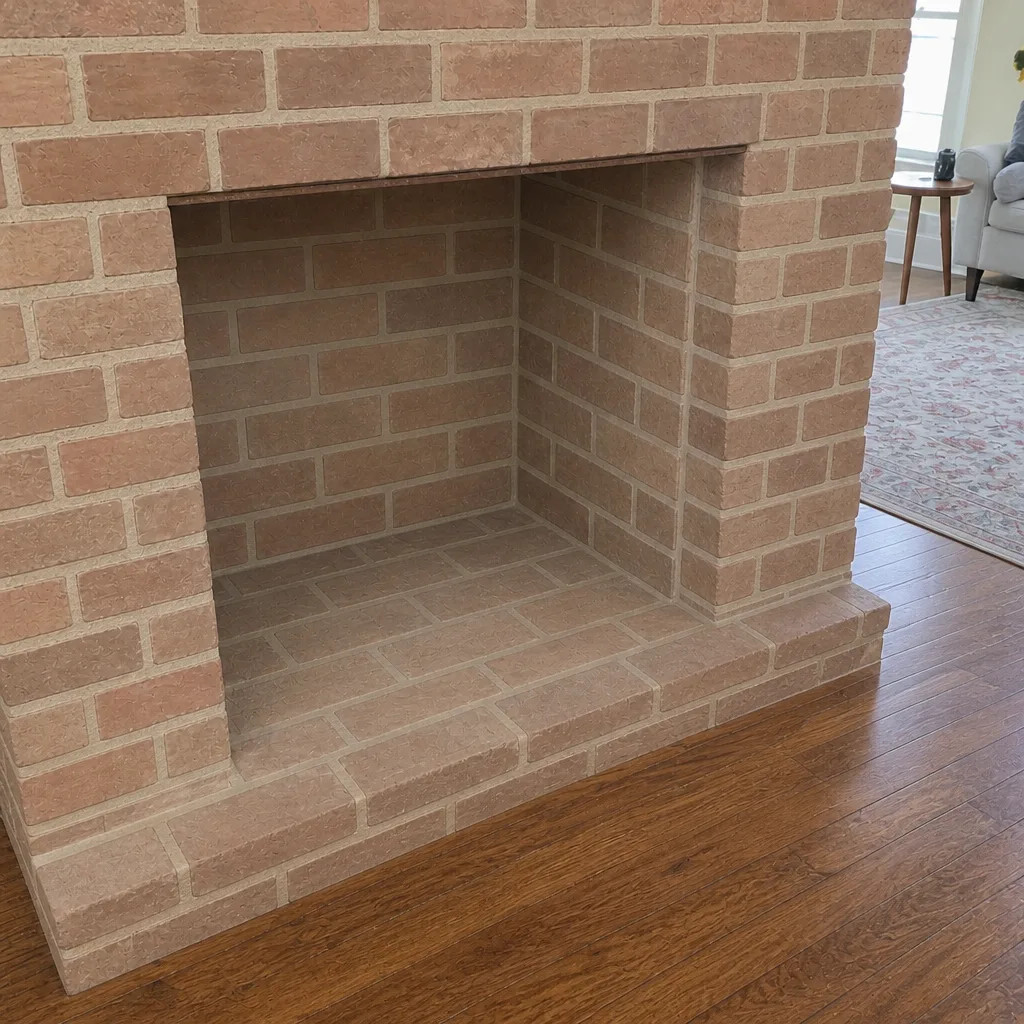
See the difference
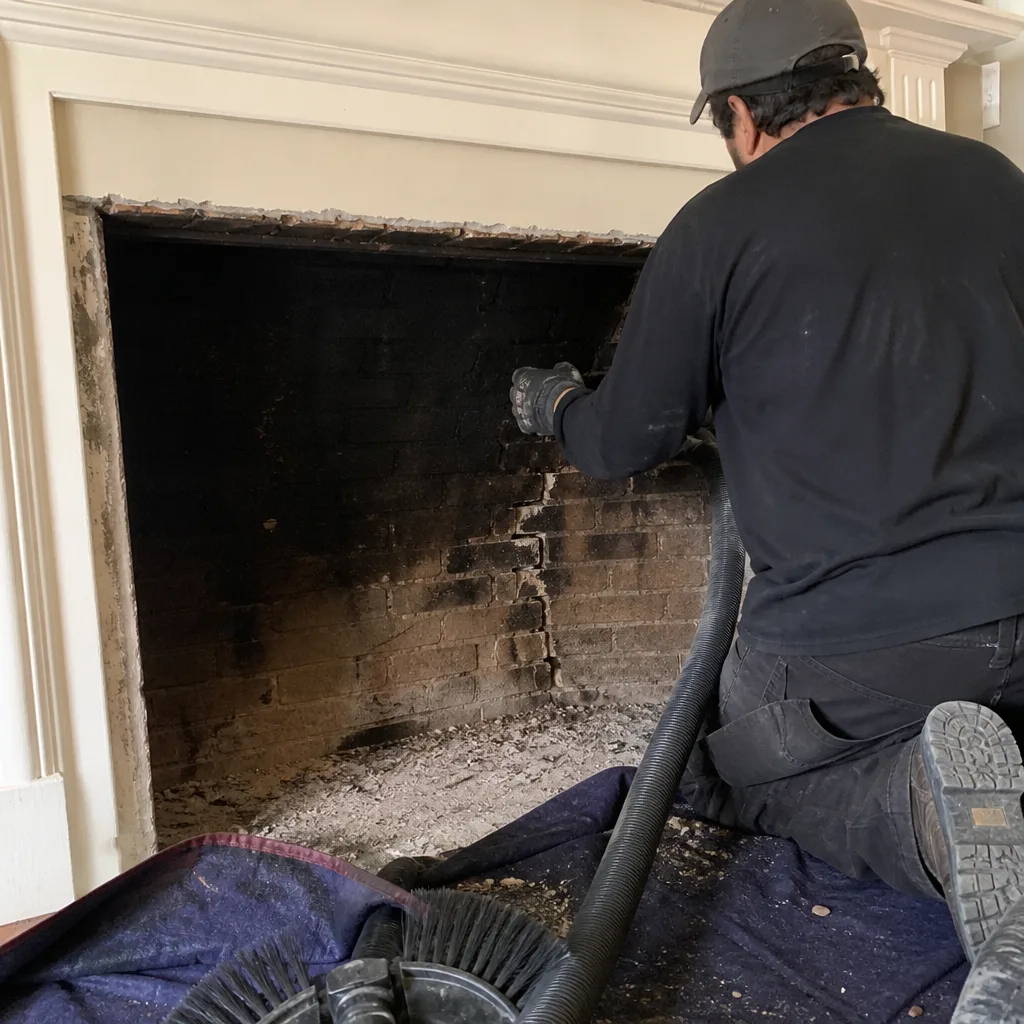 Before
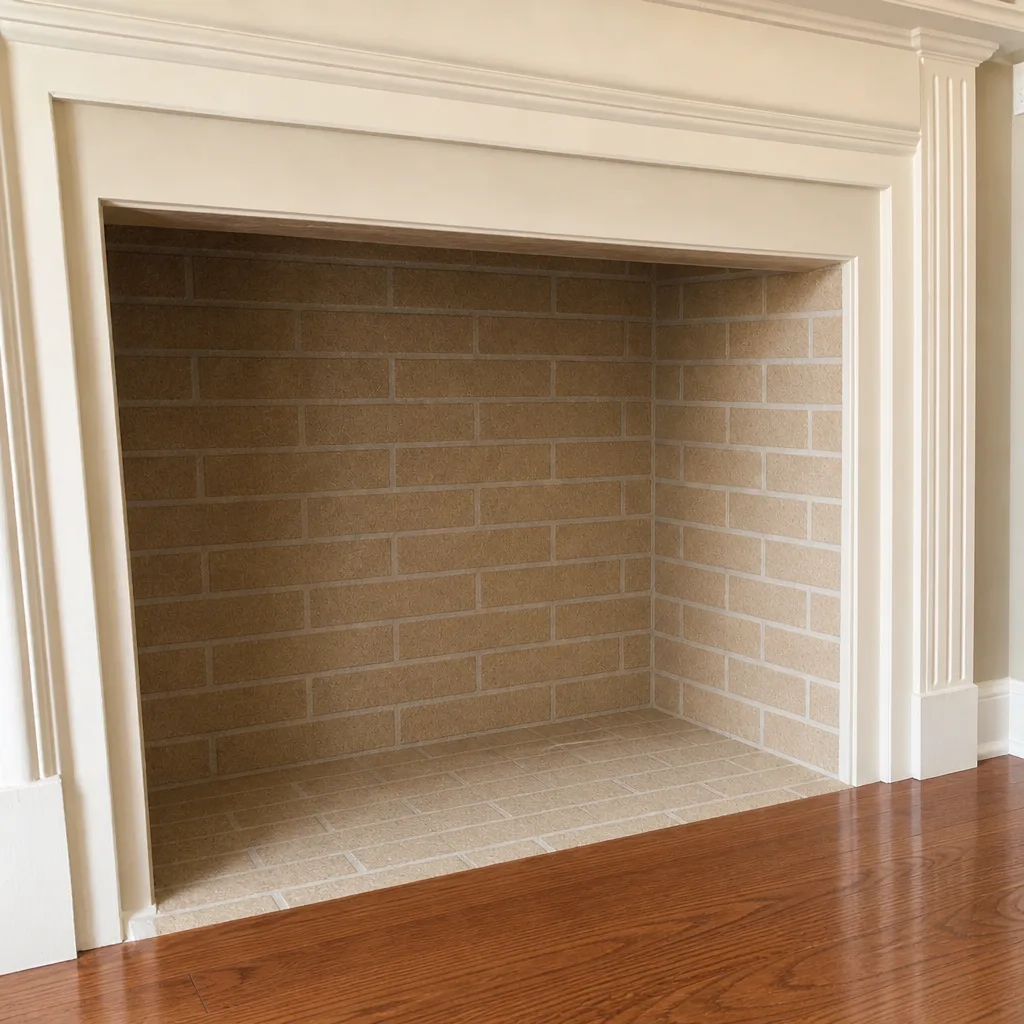 After
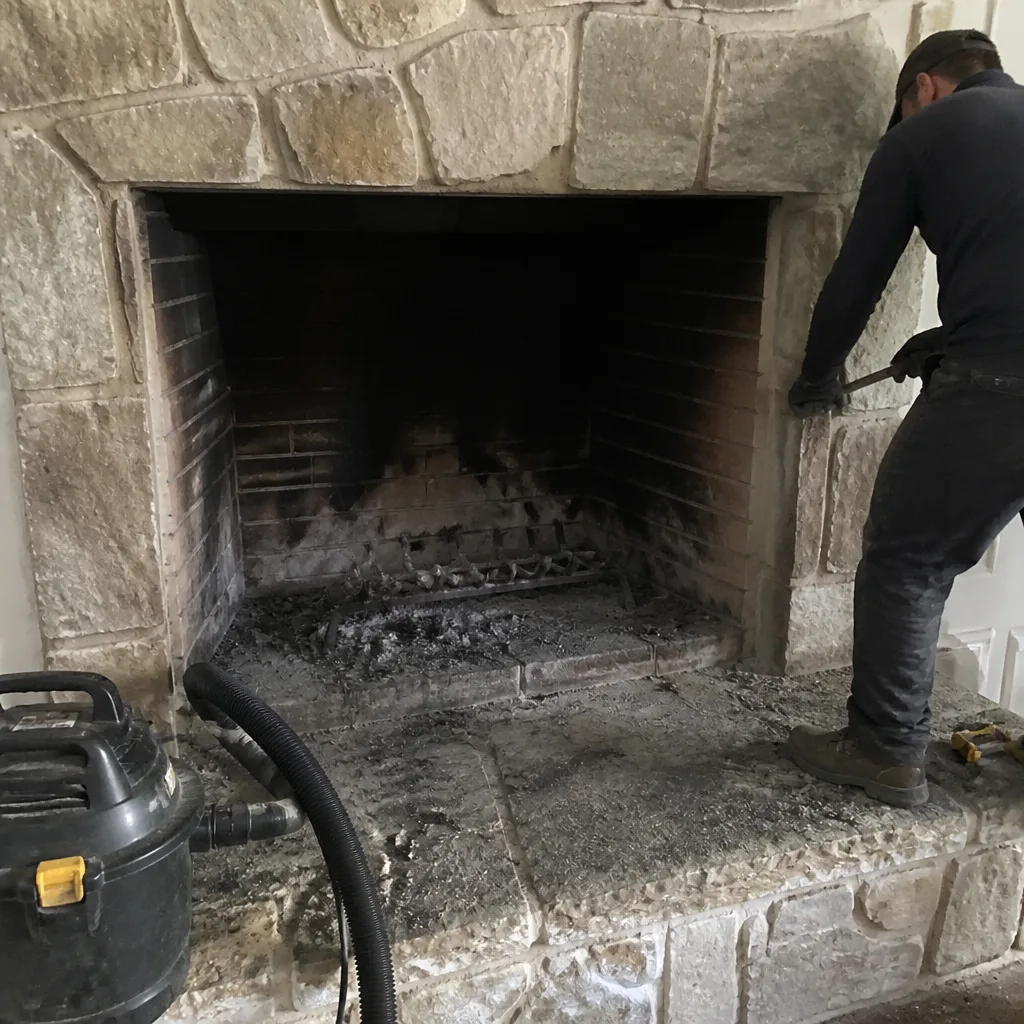 Before
 After
 Before
 After
When to Call a Professional
Some of this schedule you can manage yourself: clearing roof debris, watching for smoke back-drafting, and keeping the cap area clear. Other parts genuinely need a trained technician and the right tools. Call a professional when you see a cracked crown, a missing or loosened cap, flashing that’s lifted from the roof, ceiling stains near the chimney, debris in the firebox, or any change in how the fireplace burns. Call sooner if you suspect the chimney has been through a storm, a chimney fire, or a long winter unused. A camera inspection with a photo report gives you the evidence you need to make a decision, rather than a recommendation you can’t verify. Buckhead Chimney Sweep Pros offers free estimates in Buckhead – call (866) 947-8098. We answer 24/7. Fast dispatch from 7am to 7pm, Sunday through Friday.
Frequently Asked Questions
Once a year for most households, done alongside an inspection. Buckhead’s short burn season means creosote builds up slowly, so an annual cleaning and inspection almost always covers a typical home. Homes that burn fires most nights in winter, or that use a wood stove heavily, should have the chimney checked more often. Call (866) 947-8098 for an exact quote – estimates are free.
Because a spring inspection catches problems before summer moisture makes them worse. A crown crack found in April can be sealed before the storm season; the same crack left through summer has already soaked the masonry by October. Spring also gives you the chimney’s condition right after the burn season, when creosote is fresh and any winter wear is easiest to see. Call (866) 947-8098 for an exact quote – estimates are free.
Moisture intrudes through a cracked crown, a damaged cap, or failing flashing, then works into the masonry and the smoke chamber. Animals can enter an uncapped flue and leave nesting material. Mortar joints soften over months of repeated wetting and drying. None of it is visible from the living room, which is why the damage often surfaces only when the first fire is lit. Call (866) 947-8098 for an exact quote – estimates are free.
Pricing depends on the chimney, the level of inspection needed, and any repairs found along the way, so the written estimate sets the final price. We set a flat price before booking so there’s no surprise, and the estimate itself is free. Call (866) 947-8098 for an exact quote – estimates are free.
Not always. Many aging clay liners can be resurfaced with HeatShield ceramic coating instead of replaced, which restores the liner from the inside and avoids a full rebuild. A camera inspection shows whether the liner has cracked through or has surface-scale deterioration, and that distinction decides whether resurfacing or a flexible liner replacement like DuraFlex is the right path. Call (866) 947-8098 for an exact quote – estimates are free.
Sometimes nothing. A clean chimney with a sound cap and crown can sit a year without harm. But if the crown is cracked or the cap is loose, a single summer of storms can push water into the masonry and start a slow, expensive repair. The risk isn’t the skipped cleaning; it’s the unmonitored water intrusion that goes with it. Call (866) 947-8098 for an exact quote – estimates are free.
The Bottom Line
Chimney care in Buckhead is a two-checkpoint year, not a four-season one. The spring inspection does the heaviest lifting because it catches winter wear and stops summer moisture before it spreads. The fall preparation in late September through October confirms the system is ready before first use. Everything in between is monitoring: storm-season checks, burn-season awareness, and knowing the signs that mean a call. If you do two things, make them the spring visit and the fall check. If you’re not sure of your chimney’s condition, a camera inspection with a photo report tells you. Call (866) 947-8098. We answer 24/7. Fast dispatch from 7am to 7pm, Sunday through Friday. Estimates are free, and the work is set by a written estimate before anything begins.
For expert chimney sweep service and a full-system look at your cap, crown, liner, and firebox, Buckhead Chimney Sweep Pros connects you with local chimney professionals who handle cleaning, inspection, and repair in one call. Our technicians have up to 14 years of experience, and we work with trade-grade materials from DuraFlex, HeatShield, Gelco, Olympia Chimney, Famco, and Copperfield rather than hardware-store substitutes. Your entire chimney system – cleaned, inspected, and repaired in one call.
Written by the team at Buckhead Chimney Sweep Pros.