
Last updated November 24, 2026
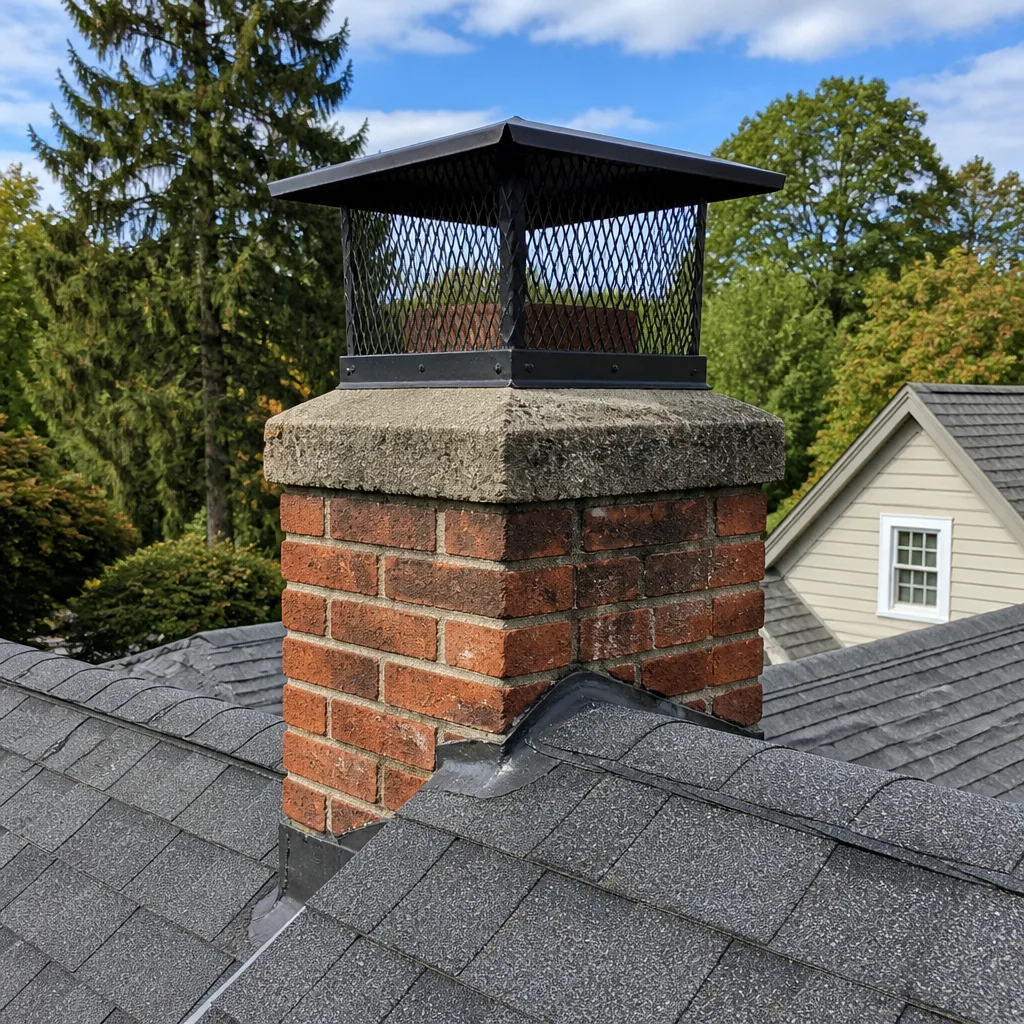 Sweep & inspection
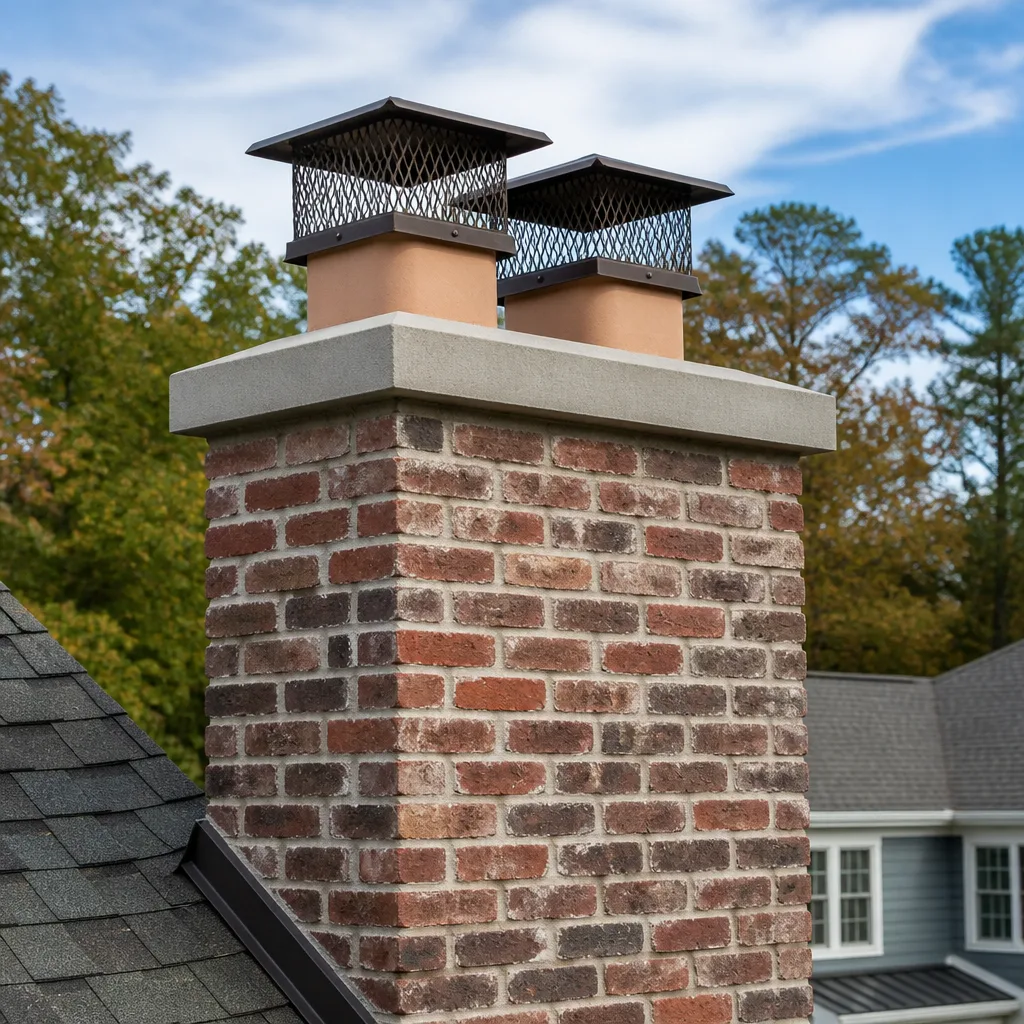 Caps & crowns
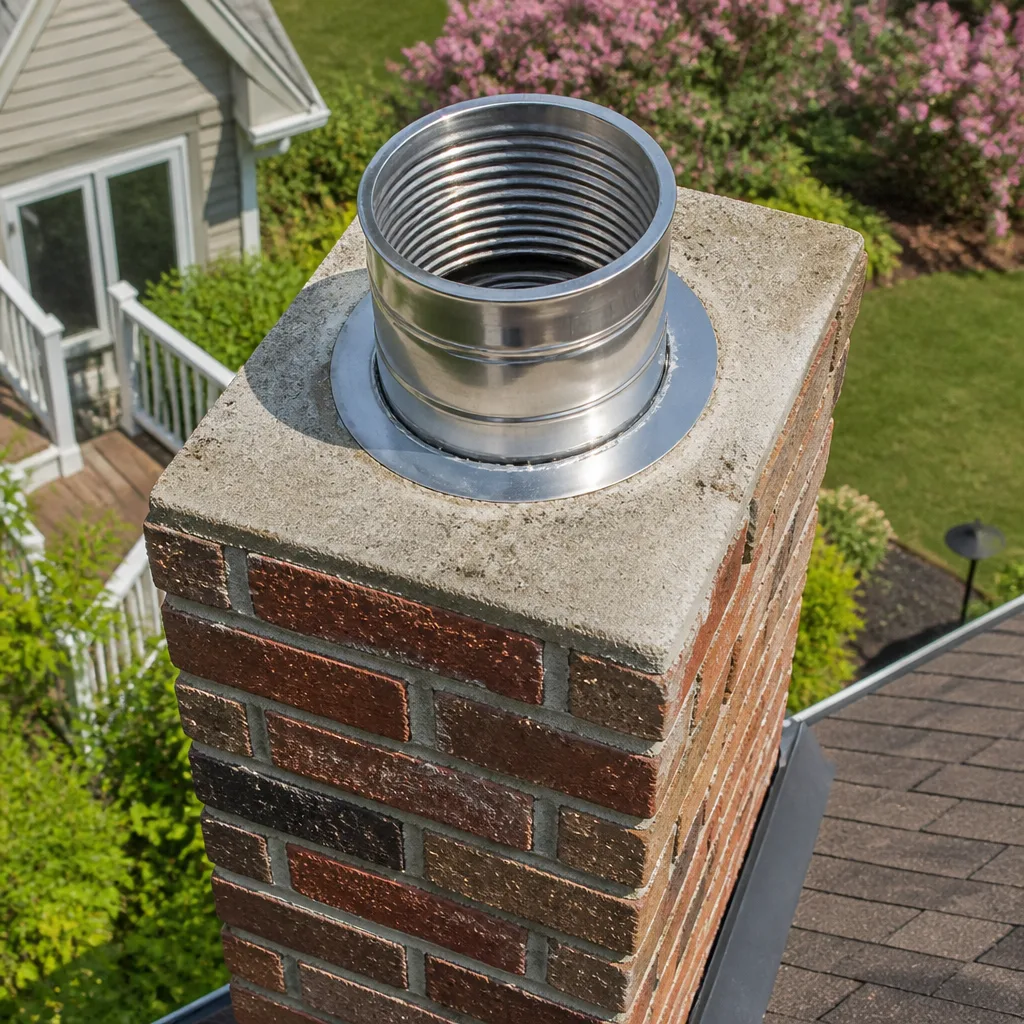 Flue relining
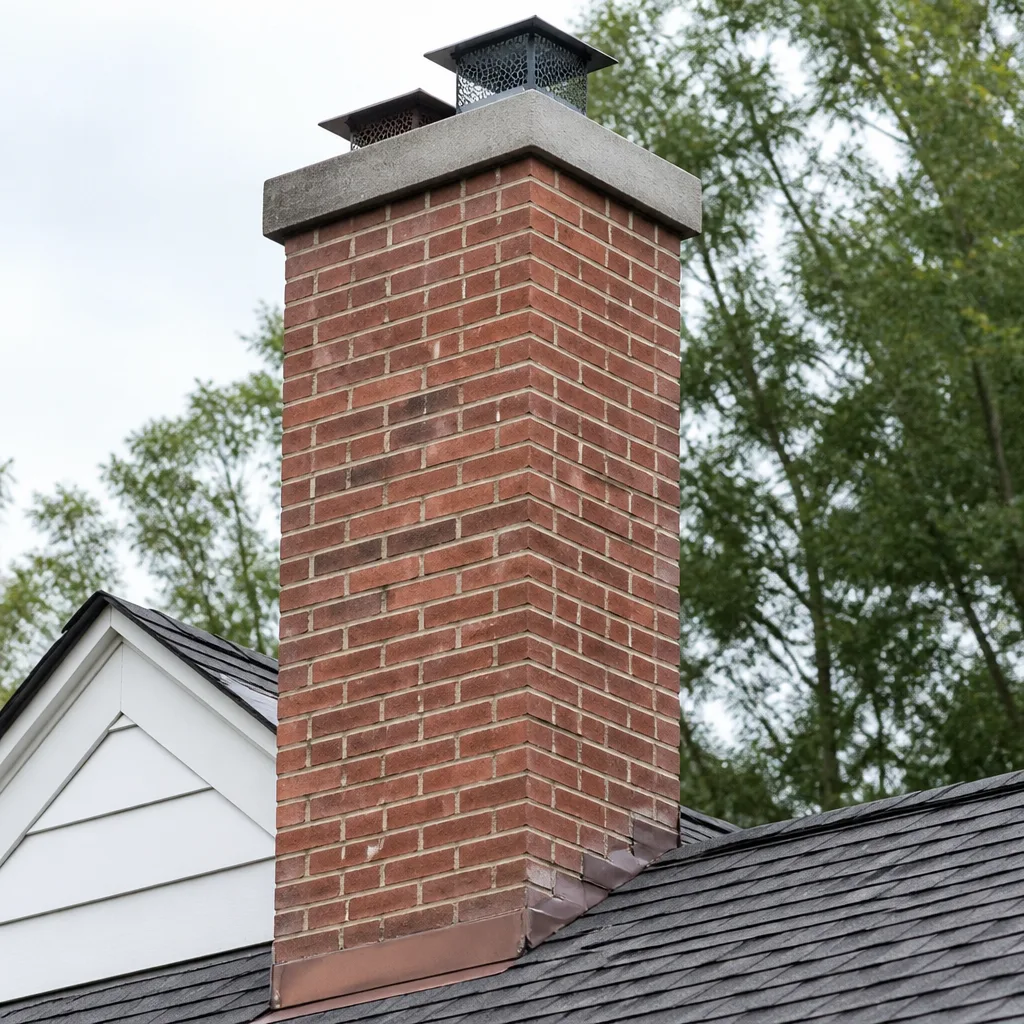 Masonry repair
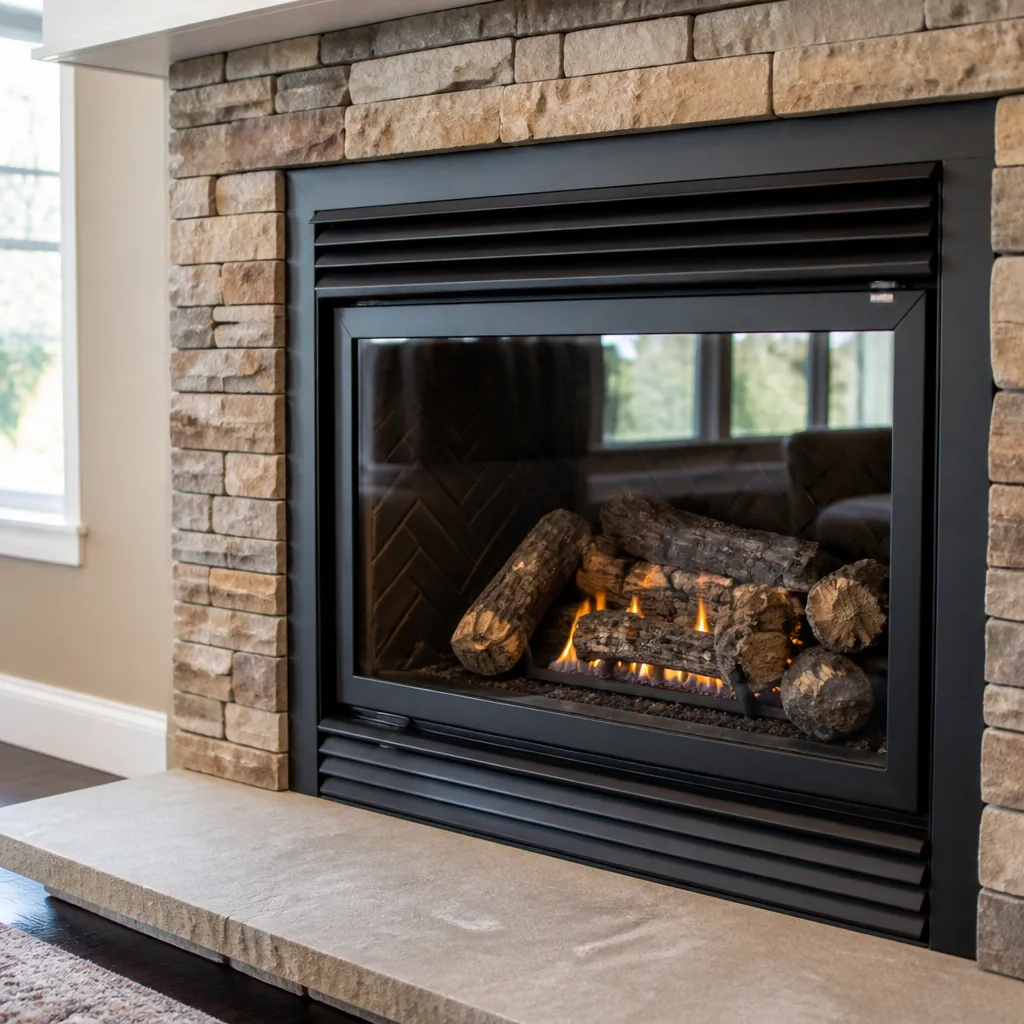 Gas fireplace service
Level 1 sweep and inspection to the NFPA 211 annual standard - flue, crown, cap, and flashing checked and photographed
Chimney sweep logs do not sweep chimneys. They loosen some creosote - which then falls where a brush and vacuum still have to collect it.
Chimney Sweep Troubleshooting in Buckhead: Common Problems and How to Fix Them
Smoke rolling back into your living room isn’t a fireplace personality. It’s a diagnostic clue, and it usually points to one of three specific flue conditions that have nothing to do with how you’re stacking your wood. Most homeowners in Buckhead chalk up a slow draw, a faint smoky smell, or a stain on the chimney breast to “an old house quirk.” That’s the wrong read. Nearly every chimney symptom maps to a known, fixable root cause. This guide does the mapping for you: symptom to cause to the actual fix. You’ll learn what you can safely check yourself, what needs a camera to diagnose, and how the tightly sealed renovations common across Buckhead change the way a chimney behaves.
Quick Answer
Most chimney problems in Buckhead trace back to one of five root causes: a blocked or undersized flue, negative air pressure from airtight home renovations, a damaged or missing cap and crown letting water in, a failing liner, or structural movement that cracks joints. Diagnosing which one you’re facing is the whole game. Each cause has a different and much cheaper fix when it’s identified early. The symptoms look similar to a homeowner, but they aren’t. A smoky firebox and a smoky smell on a warm day are two different problems with two different solutions.
Styles & brands we work with
- Sweep & inspection
- Caps & crowns
- Flue relining
- Masonry repair
- Gas fireplace service
Table of Contents
- Symptom-to-Cause Mapping: Read Your Chimney’s Signals
- Negative Air Pressure: The Buckhead Renovation Problem
- Why a Clean Chimney Can Still Have a Draft Problem
- What You Can Safely Check vs. What Needs a Camera
- Buckhead’s Clay Soil and Chimney Lean: The Connection
- Cap and Crown Failures: The Water Entry Story
- When a Liner Needs Resurfacing vs. Replacement
- When to Call a Professional
Symptom-to-Cause Mapping: Read Your Chimney’s Signals
Chimney troubleshooting starts with matching the symptom to the failure it actually represents. Most people skip this step and jump straight to a diagnosis they heard somewhere. Don’t. Here’s the map we use on every call.
Smoke rolling back into the room when you light a fire. This is a draft problem, and it’s usually one of three things: a flue that’s too short or undersized for the firebox opening, a blockage in the flue, or negative pressure pulling smoke down the chimney instead of up. The fix differs for each. A too-short flue may need an extension. A blockage needs to be swept and inspected. Negative pressure is a house problem, not a chimney problem, and we’ll get to that.
A smoky or creosote smell on warm days. This is almost always a creosote buildup issue combined with pressure reversal. Warm exterior air is heavier than warm interior air, so the chimney pulls air downward, dragging the smell of last winter’s creosote into the house. A sweep removes the creosote. A cap won’t fix the pressure reversal, but clearing the buildup makes the smell far less noticeable.
Slow draw that improves once the fire gets going. A chimney that’s sluggish at light-up but drafts fine once the fire is hot usually has a marginal flue size for the opening, or it’s cold and needs a pre-heat. Short of a flue change, priming the flue with a lit twist of newspaper helps, but if the draw is slow even when hot, you’re likely sizing the firebox wrong for the flue.
Staining on the chimney breast or ceiling near the stack. Stains point to water, and water points to a cap, crown, or flashing failure. A cracked crown lets water soak the masonry, and the stain appears weeks or months later. This one needs to be looked at from the roof, not from inside.
Every symptom on that list points to a different part of the system. If you’re not sure which box your symptom checks, the annual chimney sweep and inspection is where you get a clear answer instead of a guess.
Negative Air Pressure: The Buckhead Renovation Problem
Here’s the one most chimney companies miss. If you’ve recently sealed your home – new windows, fresh insulation, a tightly drafted addition, spray foam in the attic – you’ve likely created negative air pressure. That means the air pressure inside your house is lower than outside. Every appliance that vents, including your fireplace, competes to pull air in from the house. If the house is tight, the fireplace starts pulling air down the chimney instead of up. Smoke goes where the pressure pushes it, and that’s backward into your room.
This is common in Buckhead renovations, especially in older homes that were originally built leaky and have since been sealed for efficiency. The chimney itself may be spotless and perfectly sized. The problem is the house envelope.
How to identify negative pressure as the cause:
- Light a candle or a match near the closed firebox and watch the flame at the base of the damper. If it bends toward the house rather than up the flue, you’re looking at pressure, not draft.
- Open a window on the opposite side of the room by a hand’s width and relight a small fire. If the smoke behavior improves significantly, the house is fighting your chimney.
- Check whether your other vented appliances – bathroom fans, kitchen hood, dryer – pull the smoke draw down when they’re running. A strong kitchen hood can overpower a modest flue all on its own.
The fix is air balance, not chimney repair. A whole-house pressure test and a dedicated combustion air supply to the firebox often solves it. Sometimes the answer is a chimney fan or a top-sealing damper, but those are last stops, not first. We don’t sell them as a first stop, and neither should anyone else. If you’re in Buckhead and your fireplace starts acting up after a renovation, this is the first thing to rule out.
Why a Clean Chimney Can Still Have a Draft Problem
We hear the same thing in Buckhead repeatedly: the chimney was just swept, it’s spotless, and yet the fire still smokes. That’s not a cleaning failure. A clean chimney has no impact on airflow if the flue is undersized for the firebox, or if the firebox opening is oversized for the flue.
Here’s the relationship that matters. A fireplace pulls air up through the flue based on the difference between the flue’s cross-sectional area and the firebox opening area. Industry guidance sets a ratio: the firebox opening should be roughly ten times the flue area, but that’s a starting point, not a hard rule. When the flue is too narrow, the fire generates more exhaust than the flue can carry, and the excess has only one place to go. When the firebox opening is very wide, the air volume moving into the firebox is greater than the flue can pull, and the same thing happens.
You’ll notice this most in Buckhead homes with large masonry fireplaces built in the mid-century, before flue sizing was standardized. A firebox that was sized for aesthetics doesn’t always pair with a flue sized for function. Adding a taller flue cap or a top-mount damper may help marginally. A metal insert with a correctly sized flue is the real answer when the firebox is oversized. It’s not a repair; it’s a correction of a design that was always wrong.
A chimney professional diagnoses this by measuring both areas and calculating the draft capacity, not by guessing from a visual inspection. If your chimney has been swept, and you’re still getting smoke, ask for the measurement. The answer will be a number.
What You Can Safely Check vs. What Needs a Camera
Some chimney checks are safe for any homeowner to do. Others need a trained technician with a camera on a pole, and getting the line wrong can mean a missed diagnosis or an actual injury. Here’s the division.
Safe for you to assess:
- Whether the damper opens and closes smoothly and seats flush.
- Whether smoke rolls out of the firebox at light-up or draws normally.
- Whether you can see daylight through the flue from the top, if you can safely view it from the roof without climbing (never climb a steep roof to check this).
- Whether the cap is present, intact, and animal-proof from the ground with binoculars.
- Whether staining or efflorescence (white mineral deposits) appears on the chimney breast or the exterior masonry.
- Whether the crown on the chimney has visible cracks.
Requires a camera and a trained eye:
- Liner integrity at every joint, especially offsets and transitions.
- Creosote buildup stage (glaze vs. fluff), which changes how the chimney is swept.
- Internal cracks in clay tiles that won’t show from the firebox or the top.
- Flue sizing and draft measurement relative to firebox opening area.
- Hidden water damage behind the firebox, which rarely shows inside the room.
- Bird or animal nests or debris lodged at an offset.
A camera inspection runs from the firebox up through the flue and back down from the top. It’s the fastest way to answer a question that a visual scan from inside the room can’t. Ask for the photo or video report before you authorize any repair. You should see what the technician sees.
If you’re noticing cracked or missing mortar inside the firebox itself, that’s a job for fireplace repair and it sits alongside whatever the camera shows in the flue above.
Buckhead’s Clay Soil and Chimney Lean: The Connection
Chimney movement is underdiagnosed in Buckhead, and the reason is the soil. Atlanta’s ground is heavy clay, and clay behaves badly when it gets wet and then dries. It swells, then it shrinks, and the cycle repeats with the seasons. That movement doesn’t happen evenly under a house. It happens where water collects and drains poorly, or where a mature tree’s roots are pulling moisture out of the soil.
Here’s how clay soil shows up as a chimney problem:
- The footing under the chimney settles slightly. The chimney tilts a fraction of an inch, which isn’t visible to the eye but is measurable.
- The tilt stresses the masonry joints, and cracks open in the firebox corners first, because that’s where the firebox meets the chimney body.
- Water gets into those cracks, freezes in a cold snap, and widens them season over season.
- A flue tile inside the chimney shifts, and the liner loses its continuous seal.
What homeowners see first is usually a hairline crack in the firebox corner or a gap at the hearth. What they don’t see is that the chimney has moved. The fix is not to patch the crack and move on. It’s to determine why the chimney is moving and whether the footing is stable. A chimney that leans further each year isn’t a cosmetic problem; it’s a structural problem, and it can affect the flue’s safety.
The good news is that chimney movement isn’t common to every Buckhead home. It happens more in homes with poorly draining grade, older foundations, or a mature tree within root-reach of the chimney footing. If you’re seeing recurring cracks after a patch, that’s your sign that the movement is still active. A proper inspection measures the lean and documents it before anyone recommends a fix.
Water entry from above often compounds the issue. That’s where chimney cap & crown work matters: stopping water at the top is the first line of defense against the whole chain.
Cap and Crown Failures: The Water Entry Story
Most chimney water damage starts at the top of the chimney, not the middle. The crown is the concrete or masonry slab at the very top that sheds water away from the flue. The cap is the metal or masonry cover that sits over the flue opening. When either fails, the whole chimney system absorbs water it was designed to shed.
Signs the crown is failing:
- Visible cracks running through the crown surface, especially wider than a hairline.
- The crown has pulled away from the flue tile, leaving a gap where water enters.
- Moss or algae growing on the crown surface, which holds moisture.
- Flaking or spalling concrete on the top of the chimney.
Signs the cap is failing or missing:
- No cap at all, which is common in Buckhead homes that predate the modern practice of capping every flue.
- A rusted or bent cap that no longer blocks rain angled by the wind.
- Visible gaps where the cap attaches to the flue tile.
- Animals (birds, squirrels, raccoons) getting into the flue, which points to a missing or oversized cap screen.
Water entry from a bad crown or cap doesn’t show up immediately. It travels down the flue, soaks into the masonry, and only surfaces as a stain on the interior chimney breast weeks or months later. By the time you see the stain, the crown has usually been failing for a while.
Cap replacement is one of the few chimney repairs that can happen in a single visit when the right products are on hand. We stock Gelco and Famco caps precisely because a cap shouldn’t be a return trip. A proper cap fit matters as much as the brand; an off-size cap lets wind-driven rain past the screen edge. If your cap is missing, it’s the single cheapest action that prevents the most expensive downstream repairs.
When a Liner Needs Resurfacing vs. Replacement
A damaged liner isn’t a one-size repair. There’s a real difference between a liner that’s cracked in one spot and a liner that’s lost integrity throughout. Getting the right diagnosis determines whether you need a resurfacing job or a full reline, and the cost difference is substantial.
Two paths exist for restoring a liner:
- Resurfacing with HeatShield. HeatShield is a ceramic-based resurfacing material applied to the existing clay flue tiles to seal cracks and establish a smooth, insulating surface again. It works best when the flue’s structure is still intact and the damage is cracking at joints and seams rather than a total loss. This is a specialized service that most sweep-only companies can’t perform, and it’s the reason we can offer a repair where another company would be recommending a full replacement.
- Relining with a flexible liner system. When the flue tiles have failed structurally, a stainless flexible liner (we use DuraFlex systems) is the answer. It re-lines the entire flue path with a continuous interior surface, giving the chimney a new, gas-tight passage up and out. It’s a bigger job than resurfacing, but on a failed liner, it’s the correct one.
How we decide: a camera inspection shows whether the cracks are localized or widespread, whether the clay tiles are displaced, and whether any chimney movement is ongoing. If the liner is intact and only cracking at the seams, resurfacing can restore it. If tiles are misaligned or there’s clear structural failure, resurfacing won’t hold, and a flexible liner is the path.
We don’t recommend a liner on evidence we haven’t shown you. If the camera shows damage, we show the footage and explain what we see. If the liner is fine, we say so. The single most common thing we can protect you from is a liner recommendation you didn’t need. The second most common is a liner failure the homeowner had no idea about, because nothing showed inside the room. The camera is the check on both.
Common Mistakes to Avoid
- Sweeping without inspecting. A sweep clears the flue, an inspection reads the flue. In Buckhead, a home over a decade old with no inspection history usually has at least one thing a brush won’t catch. Ask for the camera report every time a sweep happens; if you don’t get it, ask why.
- Skipping the sweep because the last fire burned clean. “Clean” wood burns cleaner, not without residue. Creosote forms at every burn, and skipping a year stacks it in the flue. A chimney is a safety standard, not a luxury service.
- Blaming backdraft on the firewood. If smoke rolls back into the room, wood moisture and stacking are unlikely to be the whole story. Check negative pressure and flue sizing before you change how you build fires.
- Patching a firebox crack without checking for movement. A hairline crack that comes back after patching is a sign the chimney is moving. Patching without diagnosing the movement hides the symptom, and the underlying movement doesn’t stop.
- Leaving the cap off as an experiment. A missing cap lets rain down the flue, animals in, and wind-driven water past the crown. A cap doesn’t cause draft problems; it prevents water problems.
- Hiring a general handyman to sweep the chimney. A handyman who sweeps as a sideline may not carry the inspection camera, the resurfacing material, or the cap inventory to finish the job in one visit. A chimney-only specialist brings the right tools to the first appointment.
- Ignoring cream-colored deposits on the chimney exterior. White staining (efflorescence) on brick means moisture is passing through the masonry from behind. That’s a crown, cap, or flashing issue waiting to become an interior repair.
- Assuming a gas fireplace has nothing to sweep. A gas-burning fireplace still needs its venting inspected for blockages, corrosion, and proper draft, even if no wood creosote accumulates. Sweep or inspection depends on the appliance, not the fuel.
The people we recommend avoiding aren’t usually bad actors; they’re generalists doing a job without the right diagnostic step. We’ve listed the specific mistakes because each one maps to a fix that’s cheaper when caught early. If one of them describes what you’re seeing in Buckhead, our team can take the call and give you a straight answer about what needs doing.
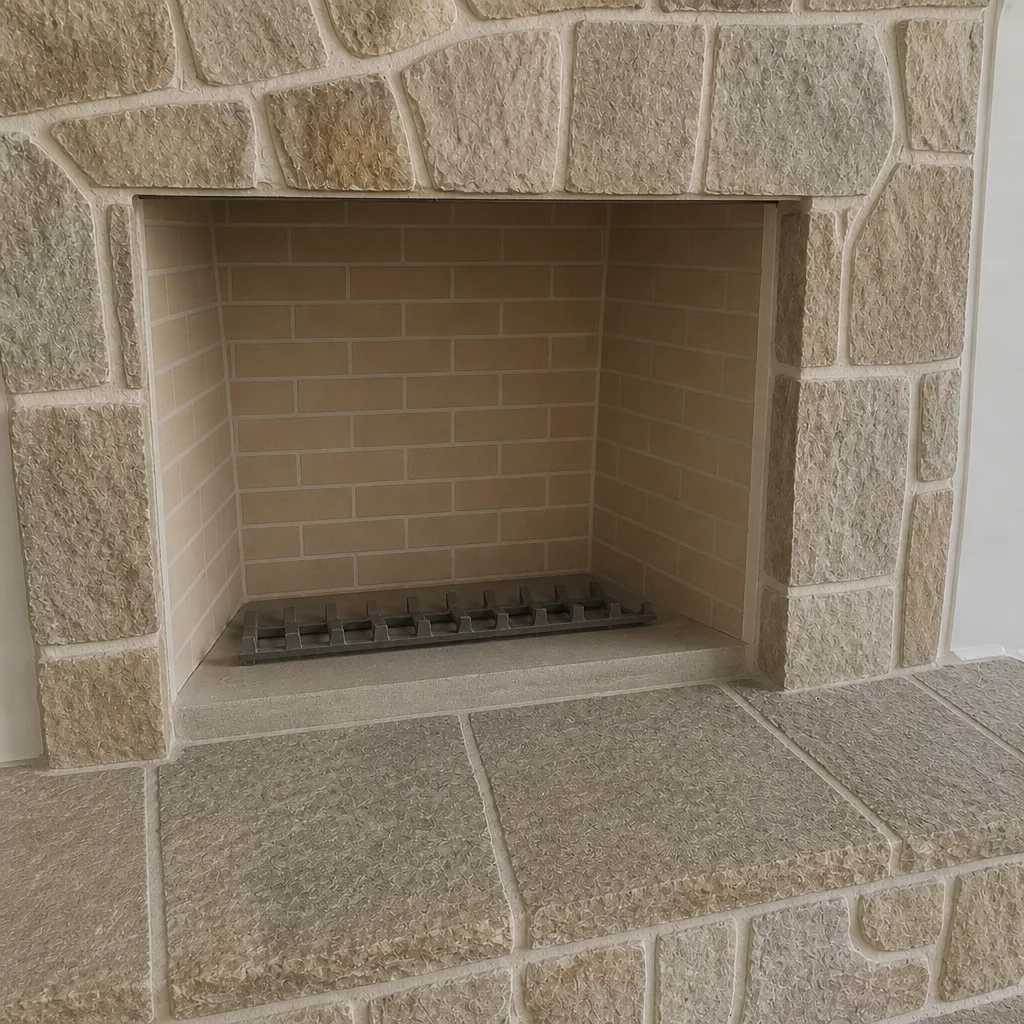
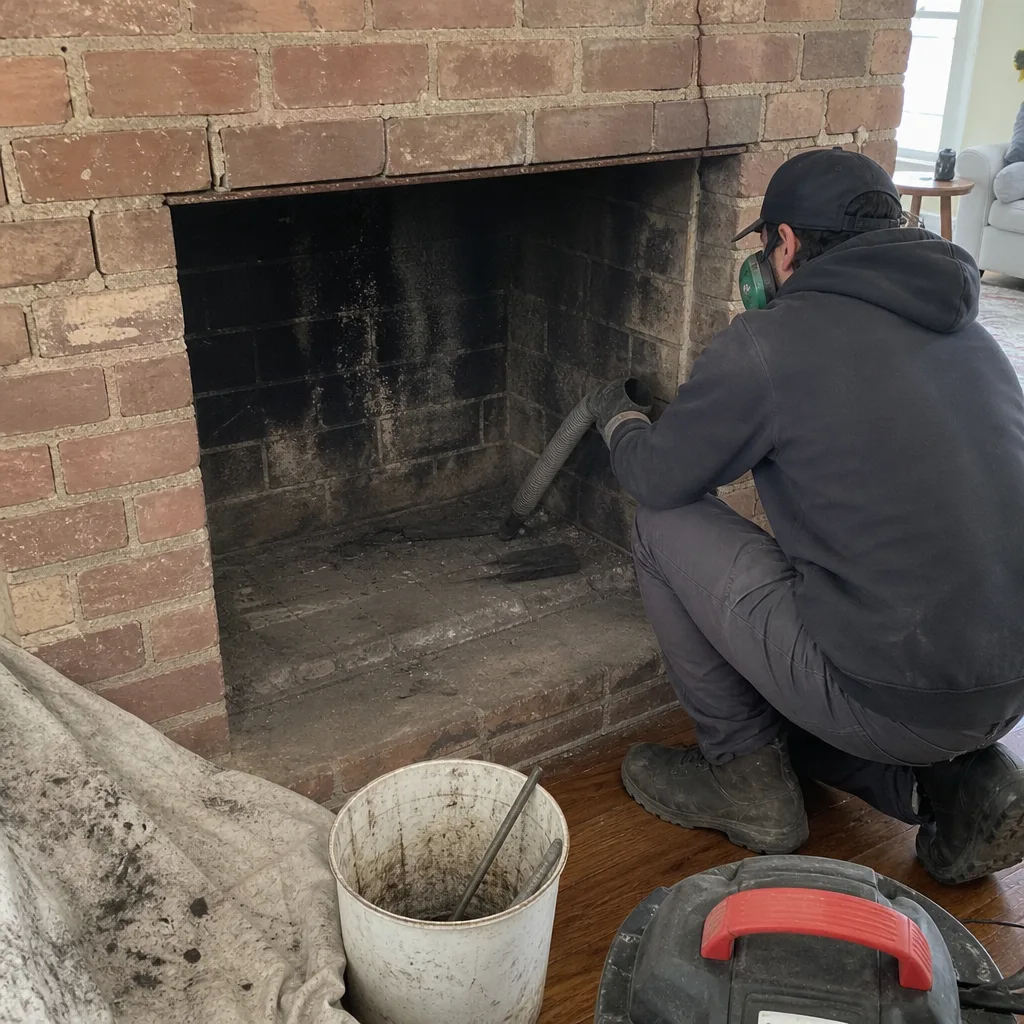
See the difference
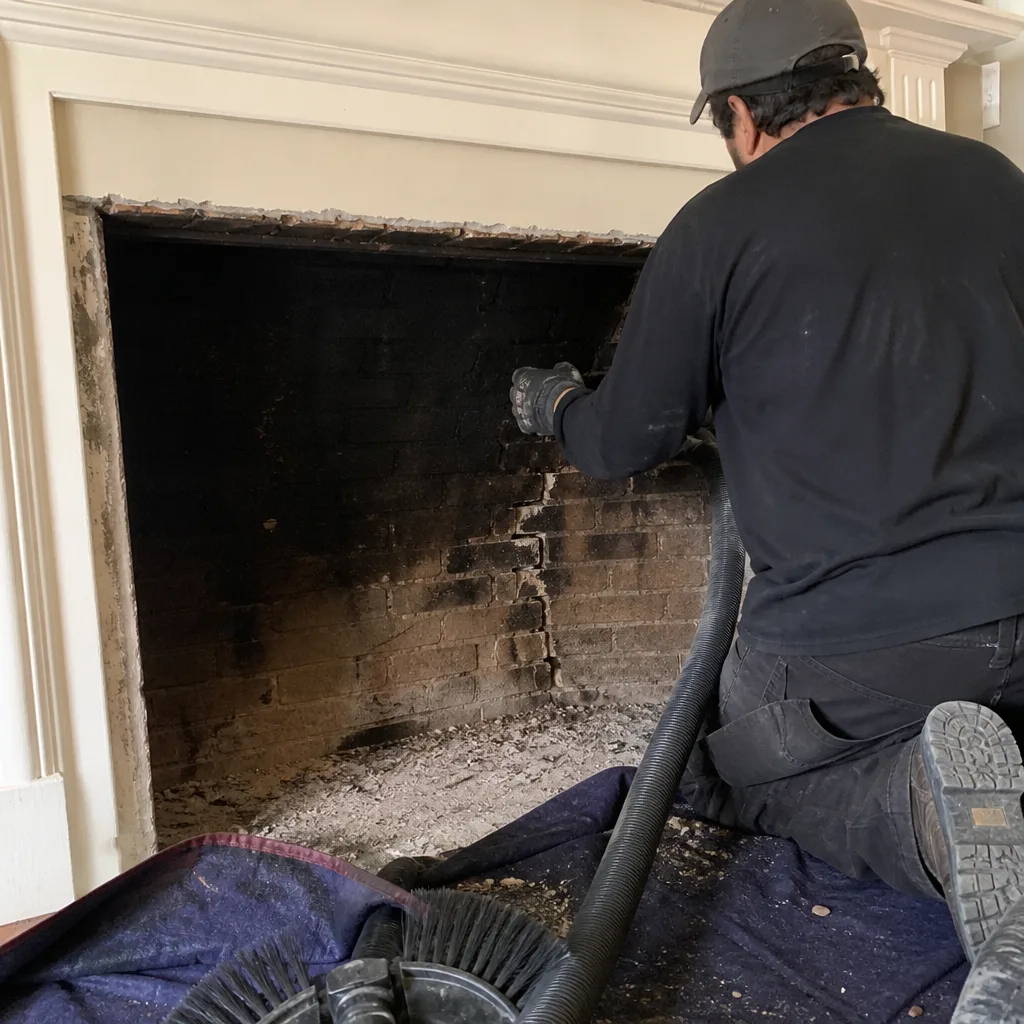 Before
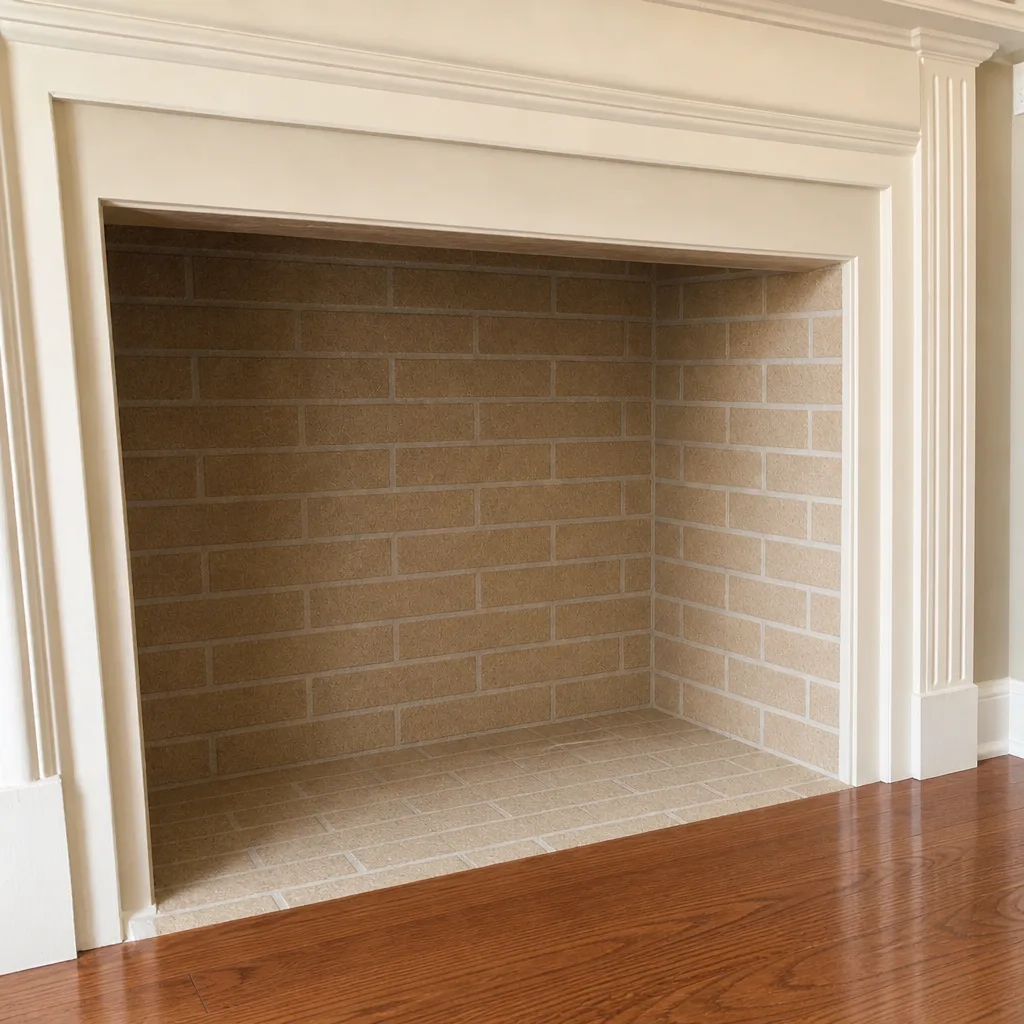 After
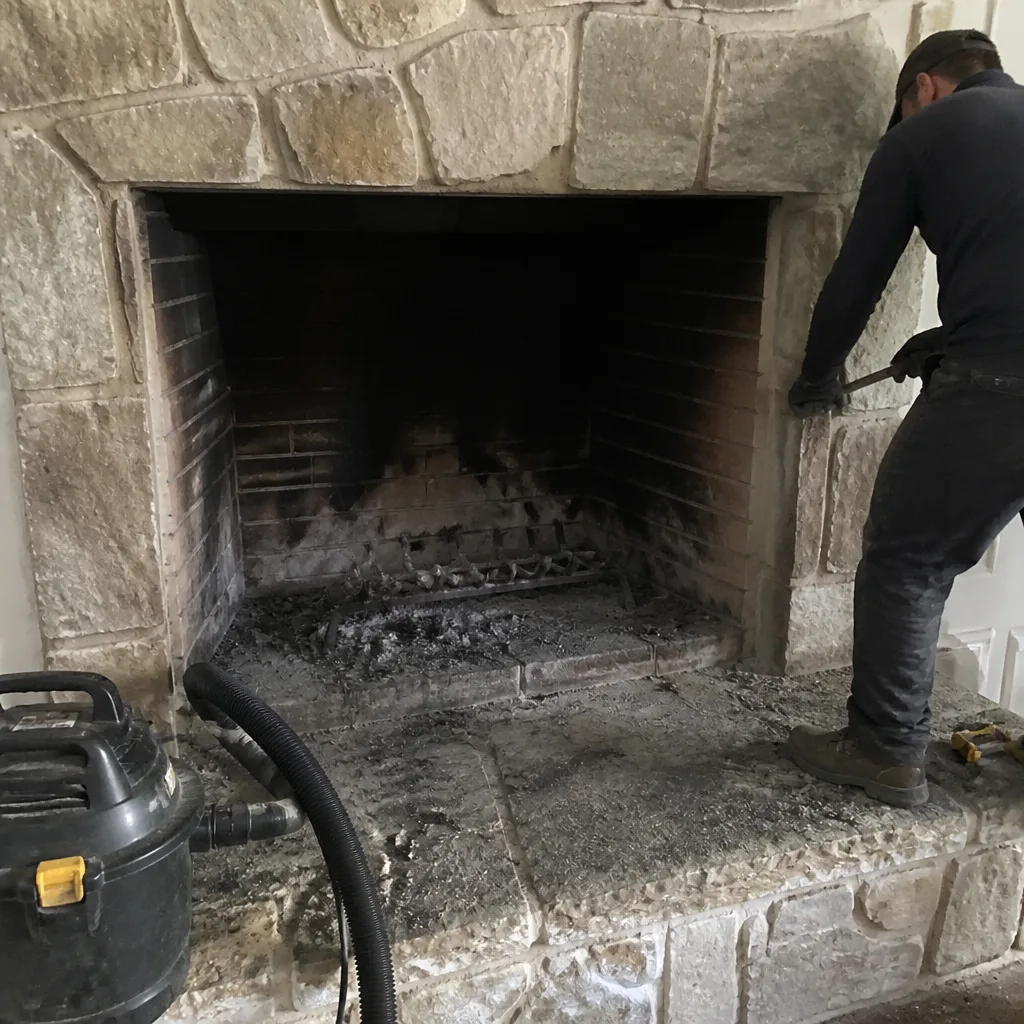 Before
 After
 Before
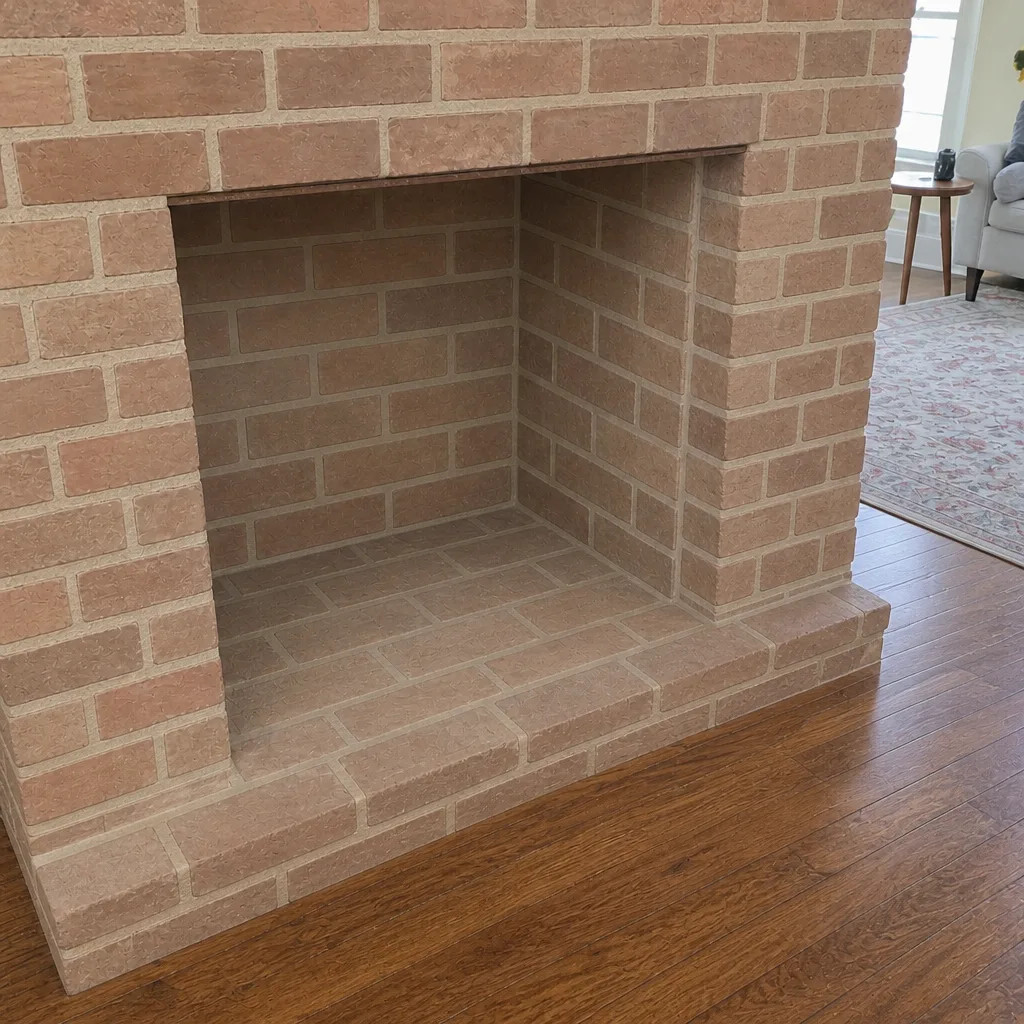 After
When to Call a Professional
Some chimney work is safely in the homeowner’s hands; most isn’t. You can light a test fire and watch the smoke path. You can see the crown and cap from the ground. You can check whether any of the symptoms above apply to your chimney. What you shouldn’t do is climb the roof, open a firebox that shows structural cracking, or sweep a flue with a brush on a pole. The height is dangerous, and the inside of a masonry chimney is the part that fails silently.
Call a professional when any of the following are true:
- You haven’t had the chimney inspected in a year or more.
- You’ve just bought a home in Buckhead with an unknown chimney history.
- You see smoke rolling back into the room reliably.
- You see staining on the chimney breast, ceiling, or exterior brick.
- Your crown has cracks, or your cap is missing or damaged.
- You notice a recurring crack in the firebox corner that returns after patching.
- You’re preparing documents for a home purchase or insurance review.
Buckhead Chimney Sweep Pros offers free estimates in Buckhead. Call (866) 947-8098. We answer 24/7. Fast dispatch from 7am to 7pm, Sunday through Friday. Our technicians have up to 14 years of experience, and we’ll show you what the camera sees before recommending a repair.
Frequently Asked Questions
At least once per year if you burn wood regularly, and once every two or three years for a gas fireplace that’s inspected rather than swept. Annual inspection is the standard most chimney professionals and insurance reviewers look for. A chimney that hasn’t been looked at in over a year should be booked before the next burning season. Call (866) 947-8098 for a free estimate.
Smoke backdraft into the room almost always points to one of three causes: a blocked or undersized flue, negative pressure from a tightly sealed house, or a flue that’s cold and needs to be primed before the fire draws. If opening a window on the opposite side of the room improves the problem, negative pressure is likely the culprit. A camera inspection and a pressure check will identify the right fix. Call (866) 947-8098 to book an inspection.
Only if the camera shows the existing liner is cracked, displaced, or genuinely failed. A liner with seam-level cracking can often be resurfaced with HeatShield instead of replaced with a flexible DuraFlex system. You should see the footage from the camera before you approve either repair. Ask any chimney company to show you the evidence before recommending a liner. Call (866) 947-8098 to see the difference.
Creosote continues to build in the flue, and enough of it can ignite, which causes a chimney fire the homeowner often doesn’t hear. Even a low-level fire can damage the flue tile and crack the masonry. If you skip the sweep because the fire looks clean, you’re relying on the fire’s appearance rather than the flue’s condition. Book the sweep before the next season. Call (866) 947-8098.
A spotless chimney can still smoke if the flue is undersized for the firebox, the house is under negative pressure, or the cap is restricting airflow. Cleaning removes buildup; it doesn’t change the flue’s ability to carry exhaust. A draft measurement and pressure check are the next step. Call (866) 947-8098 for a diagnostic inspection.
A leaning chimney in Buckhead is often related to the area’s clay-heavy soil. Clay swells when wet and shrinks when dry, and if the soil under one side of the chimney footing drains poorly or loses moisture to tree roots, the footing can settle unevenly. A measurable lean combined with cracks in the firebox corner is the sign to have the chimney inspected. Patching a crack without checking for movement won’t stop it. Call (866) 947-8098 for an inspection.
The Bottom Line
Most chimney problems aren’t mysterious, and they rarely fall on you without warning. They follow a pattern: a symptom that gets misread as a quirk, a diagnosis that skips the camera, and a repair that fixes the symptom without addressing the cause. In Buckhead, the most common misreads are negative pressure from a tightly sealed renovation, a clean-but-undersized flue, and a failing crown or cap letting water start the whole cycle. If you get one takeaway from this guide, make it this: match the symptom to the cause before you schedule a repair. The right fix is cheaper, and it’s the only one that sticks. To have your chimney looked at properly, call (866) 947-8098 for a free estimate. We answer 24/7. Fast dispatch from 7am to 7pm, Sunday through Friday. Whether it’s a routine Buckhead Chimney Sweep Pros inspection or a full liner restoration, your entire chimney system – cleaned, inspected, and repaired – is handled in one call.
Written by the team at Buckhead Chimney Sweep Pros.